By Freddy Myers
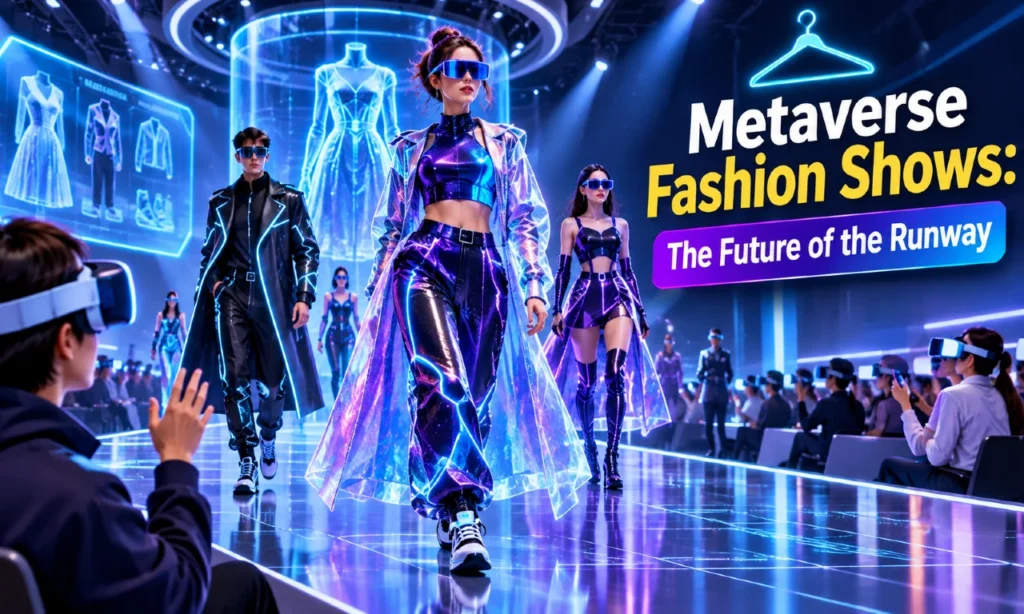
Picture a runway with no venue, no seating chart and no flight tickets. Models walk in front of a crowd that logs in from Karachi, Paris and Seoul at the same time. That is the idea behind metaverse fashion shows: the future of the runway is already taking shape, and it looks very different from a Parisian salon. In this guide, we explain how digital runways started, which brands are using them, and where the trend is heading.
What Is a Metaverse Fashion Show?
A metaverse fashion show is a runway event that takes place inside a virtual world instead of a physical venue. Guests join as avatars. They walk through digital showrooms, watch models (or avatar models) present new collections, and often buy the looks on the spot.
The format goes well beyond a livestream. A video stream only lets people watch. A virtual runway lets them move around, talk to other guests and interact with the brand. If you want a wider view of the space, our guide to digital fashion in the metaverse covers the basics.
Metaverse Fashion Week: Where Digital Runways Took Off
The first real milestone arrived in March 2022. Decentraland, a community-run virtual world, hosted the first Metaverse Fashion Week from March 24 to 27. More than 60 brands, designers and artists took part, and the programme mixed runway shows, panel talks, parties and shopping. According to Textilegence’s coverage, the wearable pieces were sold as NFTs on the Ethereum blockchain.
Big names showed up early. Dolce & Gabbana, Tommy Hilfiger, Elie Saab and Dundas all joined in, as PMG’s recap points out. Tommy Hilfiger, for example, presented its Spring 2022 collection in a dedicated space inside Decentraland.
A second edition followed in late March 2023. FashionNetwork noted that the first event relied heavily on novelty, so the organisers spread the programme across several districts, including Fashion Street and Metatokyo. After a pause in 2024, the event returned on April 9 to 12, 2025, with a new desktop client built to make the experience smoother, as eGamers reported. You can check the latest dates and details on the official MVFW website.
How Luxury Brands Use Virtual Runways
Gucci is probably the best-known example. The brand opened its Gucci Garden experience on Roblox in 2021 and launched the permanent Gucci Town space in 2022. Then, in September 2023, it went one step further. Gucci streamed the first show of creative director Sabato De Sarno on a Milan runway and, at the same time, in digital versions on Roblox, Zepeto and QQ, as Decrypt explains.
Balenciaga took a gaming route. It teamed up with Fortnite in 2021, and fans could visit a virtual store that mirrored the brand’s real shops while buying matching clothes in the physical world.
These examples share a pattern. Luxury houses treat the metaverse as a second stage, not a replacement. The physical show still sets the tone, while the digital version brings it to millions of people who would never get a front-row seat. For more on how fashion houses build their own online spaces, read our piece on virtual fashion stores.
Benefits of Virtual Fashion Shows for Brands and Fans
Why are so many brands willing to experiment? Several reasons stand out.
- Global reach. Anyone with a device and an internet connection can attend. No invitation list decides who gets in.
- Creative freedom. Designers can ignore gravity, budgets for set builds and even the laws of physics. A runway can float in the sky or sit underwater.
- Lower environmental impact. Digital pieces need no fabric, and a virtual event avoids the travel that comes with a physical fashion week.
- Deeper engagement. As Spatial’s blog on virtual shows explains, a digital space can host live Q&As after the show, private rooms for buyers and interactive lookbooks. The show then becomes a conversation rather than a one-way broadcast.
Digital Fashion and Avatar Wearables
A runway means little without clothes, and in the metaverse, those clothes are digital. Visitors can buy wearables for their avatars, often as limited editions. Gucci once sold virtual sneakers for roughly nine to twelve dollars that people could wear on platforms like Roblox, according to Freethink.
This low price point matters. It lets fans own a piece of a luxury brand without paying luxury prices. It also explains why avatar style keeps growing. If you want to see how this changes shopping habits, take a look at our article on avatar fashion and our explainer on fashion NFTs.
Challenges Facing Digital Runways
The picture is not perfect, and a good blogger should say so. Early events came with technical limits. PMG observed that Decentraland’s technology held back some of the more ambitious ideas, and that metaverse shows would not replace the big fashion weeks in New York, Paris or Milan anytime soon.
A few other hurdles remain:
- Access. Not everyone owns a device powerful enough to run a 3D world smoothly.
- Learning curve. First-time guests often need help with controls and navigation.
- Trust and value. Some people still question whether digital-only items deserve a price tag, especially after the NFT hype cooled.
Brands that ignore these problems risk building beautiful events that few people can actually enjoy.
The Future of Fashion Shows: Physical Meets Digital
So, where does this leave the runway? Most signs point to a blend of both worlds, often called phygital fashion. Real shows will continue, but they will come with a digital twin that anyone can enter. Panel topics at MVFW 2025, such as digital streetwear and phygital retail, show that the industry already thinks this way.
We can also expect better technology. Smoother graphics, AR try-ons and more personal experiences should make virtual shows feel less like a game and more like a real event. Our article on virtual clothing explores how the clothes themselves will evolve.
Final Thoughts
Metaverse fashion shows have moved from a curious experiment to a serious part of the industry’s toolkit. They are not perfect, and they will not replace the physical runway overnight. Still, they offer reach, creativity and a new way to connect with fans that traditional shows cannot match.
If you are a designer, a brand manager or simply a fashion lover, now is a good time to explore this space. Start small, join an event like MVFW, and see how it feels from the front row of a digital runway.
Frequently Asked Questions
What is Metaverse Fashion Week? It is an annual digital fashion event hosted in Decentraland. It brings together brands, designers and artists for virtual runways, panels and shopping.
Do I need a VR headset to attend a metaverse fashion show? No. Many events, including those on Decentraland and Roblox, run on a standard computer or phone.
Which brands have held virtual fashion shows? Gucci, Balenciaga, Tommy Hilfiger, Dolce & Gabbana and Elie Saab have all taken part in metaverse fashion events.